
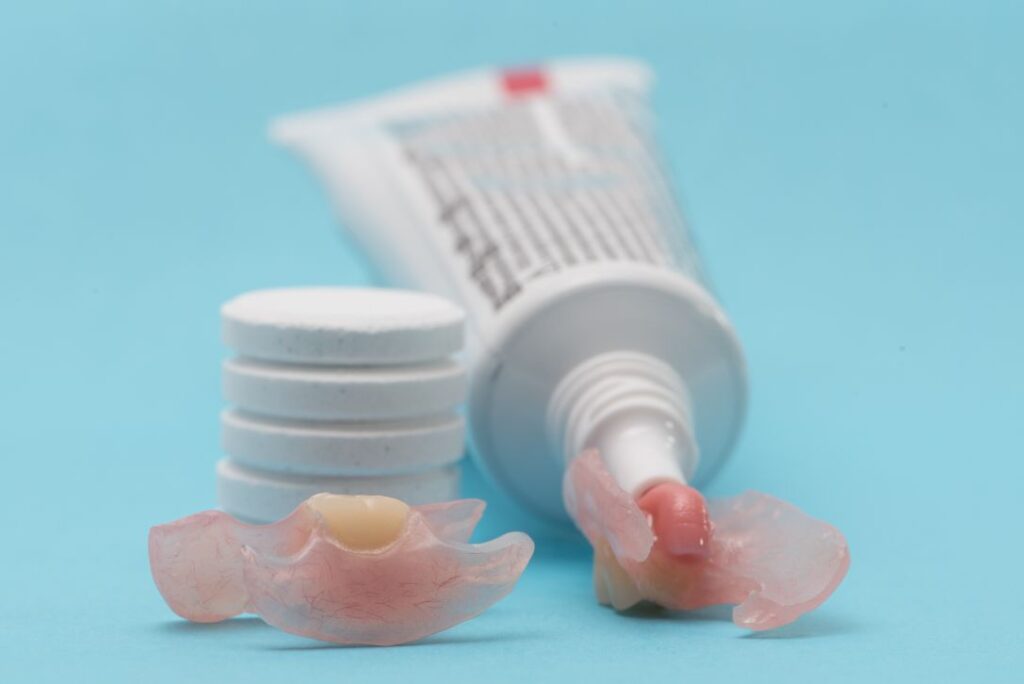
As your dentures get older, they may begin to lose their fit, slipping, shifting, or even squeaking when you move your mouth. This can be frustrating and embarrassing and is often an indication that it’s time to either reline or replace your prosthetics. In the meantime, however, you may be able to help them stay in place with a denture adhesive, but with so many varieties, many patients aren’t sure which option is best. Here’s a closer look at some of the most popular varieties, so you won’t get ‘stuck’ with the wrong product for your smile!
Denture Paste
Denture paste is said to be the most secure type of adhesive available. It typically comes in a tube, just like toothpaste, and to use it, you simply squeeze a small amount of the product directly onto clean, dry dentures along the portions that will sit on your arches and gum tissue. Then, place the denture in your mouth, pressing firmly for a few seconds, and your teeth should be ready to use instantly.
Denture Powder
Denture powder is sprayed onto a clean, wet denture along the inside of prosthetic where it will come in contact with your arches. After moistening your mouth with water, place the denture in your mouth, pressing firmly for a few seconds to secure it in place.
Denture Adhesive Strips
Although they are typically the most expensive option, denture adhesive strips are ideal for poorly fitting prosthetics and can be cut or torn to line them more precisely. To use, simply cut the strips to the size you want, wet them, and place them in the clean, dry denture. Then, press your restoration in place in your water-moistened mouth.
Cleaning Your Dentures
Once you are done wearing your dentures for the day, it is important to remove all traces of adhesive from them. To take them out of your mouth, you can swish warm water and then gently pull them so you break the suction. Then, rinse your mouth and brush your gums with a soft-bristled toothbrush so you remove all traces of the adhesive. Once your mouth is clear, be sure to scrub all sides of the denture with a different toothbrush so that it is completely clean. Leaving residue behind can trap food and bacteria particles that can lead to gum infection, as well as trap odors and bad tastes in your prosthetics.
Making a Decision That Sticks
Now that you know more about how each type of denture adhesive works, it’s time to make your decision. It is important to note that many denture adhesives contain zinc, which is not healthy in large amounts. Thus, be sure to follow the manufacturer’s instructions, and if your prosthetics aren’t fitting like they should, schedule an appointment with your dentist for help, as the sooner you repair or replace your current restorations, the less adhesive you’ll need to use in the long run.
Remember, denture adhesives were designed to help your dentures stay in place temporarily; however, they should not need it. If you find that they do, this is an important sign that it’s time to see your dentist, as your prosthetics may need a reline or to be completely replaced.
About Our Practice
At Pacific Oak Dental, Dr. Jared and Dr. Bailey want you to have a complete, secure, comfortable smile. That’s why we’re proud to offer a variety of tooth replacement options, including durable, lifelike dentures. If your current prosthetics aren’t fitting quite like they should, don’t spend too much time and money on adhesives. Schedule an appointment today and see if we can repair or upgrade your dentures so you can eat and smile with confidence. To book your appointment, visit our website or call 503-357-9122.