Dental implants are a popular way to restore missing teeth, but the process can feel confusing if your dentist starts using unfamiliar terminology. From abutments to osseointegration, these words may sound technical, but understanding them can help you feel more confident about your treatment.
Here’s a simple guide to the dental implant terms you’re most likely to encounter.
Implant
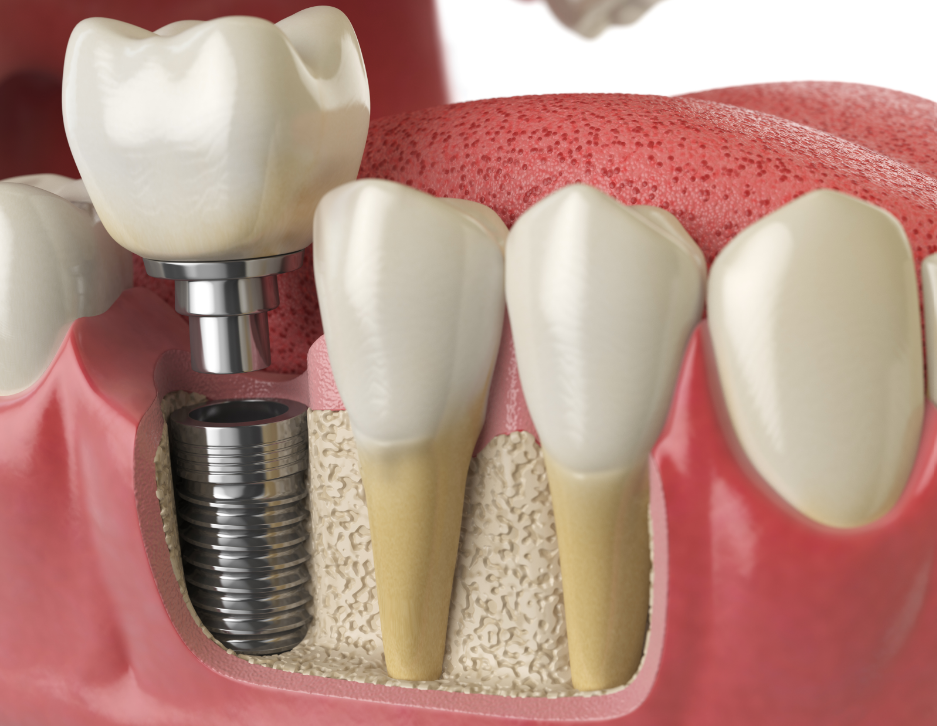
The implant itself is a small titanium post that acts as a replacement for a tooth root. It is surgically placed into the jawbone, where it provides a stable foundation for a replacement tooth, bridge, or denture. The implant mimics the function of a natural root, helping preserve jawbone and supporting surrounding teeth.
Abutment
The abutment is a connector piece that attaches to the implant and holds your replacement tooth (crown) in place. Think of it as the “middle piece” between the implant post in your jaw and the visible tooth above your gumline. Abutments can be customized for shape and angle to ensure your new tooth fits comfortably and looks natural.
Crown
The crown is the part of the implant that you see in your mouth. It is typically made of porcelain or ceramic to match the color and shape of your natural teeth. The crown attaches to the abutment and completes the dental implant restoration, allowing you to chew, speak, and smile confidently.
Osseointegration
Osseointegration is a key biological process that makes dental implants successful. It occurs when the titanium implant fuses with your jawbone, creating a strong, stable foundation. This process usually takes a few months, but it ensures your implant feels secure and functions like a natural tooth.
Mini Implants
Mini implants are smaller in diameter than standard implants and are often used in situations where there isn’t enough bone for a traditional implant. They can also be used to stabilize dentures or for quick, less invasive tooth replacement options.
All-on-4 Implants
All-on-4 is a specialized implant procedure used to replace a full arch of teeth using just four strategically placed implants. This method provides maximum support while minimizing the number of implants needed and is often used for patients who want a permanent denture solution.
Bone Graft
Sometimes there isn’t enough bone to support an implant. In these cases, a bone graft may be necessary. This procedure adds bone material to your jaw to strengthen it and ensure the implant has a solid foundation. Bone grafts can come from your own body or from synthetic sources, depending on your dentist’s recommendation.
Healing Cap
A healing cap, or healing abutment, is a temporary cover placed over the implant during the healing process. It protects the implant and helps shape the gum tissue so that your final crown will fit properly and look natural.
Understanding these terms can make your dental implant journey less intimidating and help you feel more confident discussing your treatment with your dentist.
Dental implant terminology may sound complex, but knowing these basics gives you the foundation to ask questions and understand each step of the process.
About the Practice
Pacific Oak Dental provides comprehensive dental implant services, including standard implants, mini implants, and All-on-4 solutions. Our experienced dental team works closely with patients to create personalized treatment plans, guide them through the implant process, and ensure lasting, natural-looking results that restore both function and confidence.
Call us at (503) 357-9122 or request an appointment online.